Surprising Secrets Unearthed in Unlikely Spots: Discoveries That Amaze
1. A Supernova Caused the Strange Alien Rock Discovered in Egypt
The Hypatia Stone: A Mysterious Discovery Location: Great Sand Sea, Egypt Year Found: 1996 Estimated Value: Unknown The Hypatia stone, a peculiar rock discovered in Egypt's Great Sand Sea, has intrigued scientists since its discovery in 1996. Weighing only three grams, this sample is believed to be unlike anything found in our solar system, or even the Milky Way.
Key Details: Unique Composition: The stone's composition baffled researchers for years, as it contained materials not typically associated with known celestial bodies.
Scientific Investigation: Since its discovery, extensive studies have been conducted to understand its origins. Researchers have explored various hypotheses regarding its formation and the elements it contains.
Recent Breakthrough: In 2022, South African chemists, who have been studying the Hypatia stone since 2013, may have provided new insights into its mysterious nature. Their research could potentially unravel the enigma surrounding this unique rock.
Conclusion The Hypatia stone remains one of the most intriguing geological finds, prompting ongoing research and speculation about its origins. As scientists continue to investigate, it may soon reveal secrets about our universe and the processes that shape it.
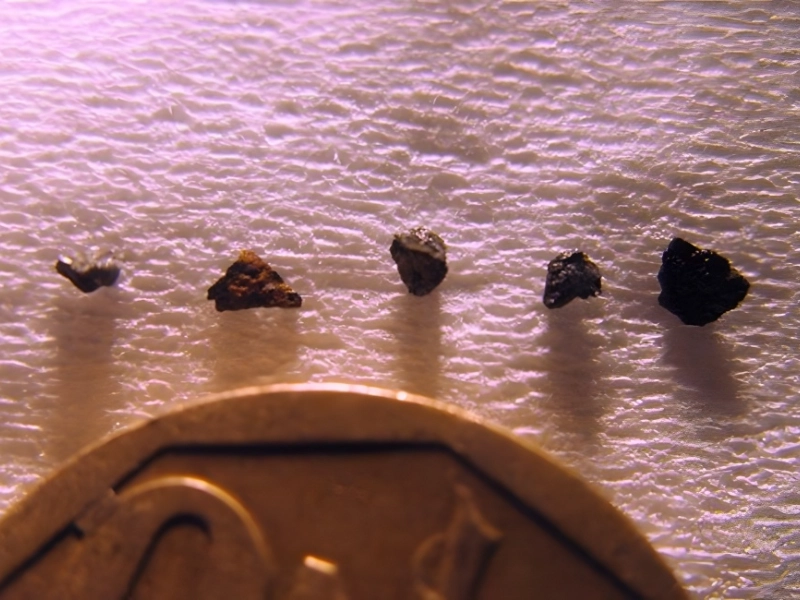
Hypatia Stone: Origins Linked to a Supernova Recent research suggests that the Hypatia stone may have originated from a rare type of supernova known as a Type Ia explosion. This discovery positions Hypatia as the first known example of such an event found on Earth.
Key Insights: Type Ia Supernova: These explosions occur in binary star systems, where one of the stars is a white dwarf. When the white dwarf accumulates enough mass, it undergoes a catastrophic explosion, releasing immense energy and light.
Ejection from a Supernova: Experts believe that the Hypatia stone was ejected during a Type Ia supernova, one of the brightest phenomena in the universe. This connection highlights the stone's extraordinary origins.
Age of the Stone: Chemists estimate that Hypatia formed during the early stages of our solar system, approximately 4.6 billion years ago. This places it among the oldest materials we can study, offering a glimpse into the conditions of the early solar system.
Conclusion The Hypatia stone's potential link to a Type Ia supernova enhances its significance in the study of cosmic events and the formation of our solar system. As researchers continue to explore its origins, Hypatia may provide valuable insights into the processes that shape celestial bodies and the universe itself.