Sip Smarter: Tailoring Your Water Intake for Optimal Health
Advertisement
3. Calculating Your Personal Hydration Needs: A Tailored Approach
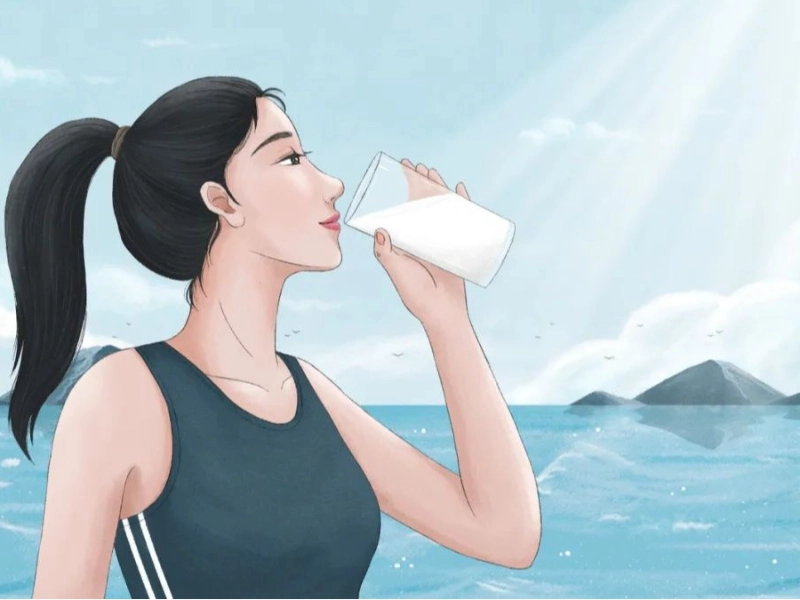
Deciding the ideal water intake for your body is not a one-size-fits-all formula. Your hydration requirements are as individual as you are and shaped by many different things. Let's look at how to figure out your individual hydration requirements and design a customised plan to guarantee adequate hydration.
Let us first discuss the elements influencing your water requirements:
1. Generally speaking, you need more water the more weight you carry. Generally speaking, one should drink half an ounce to an ounce of water everyday per pound of body weight.
2. Activity Level: You lose more water through sweat the more active you are, so you need more to be replaced.
3. Climate: High altitudes or hot, humid weather will raise your water requirements since your body will be more active to cool itself.
4. Diet: You could require extra water if you eat more sweet, spicy, or salted foods. On the other hand, a diet heavy in water-dense fruits and vegetables can help you meet your fluid consumption.
5. Health Status: Your need for hydration may be changed by some drugs or medical disorders.
6.Women who are pregnant or nursing usually need more fluids.
Let's now go over different ways to figure out your own water requirements:
Take your weight in pounds and divide it by two. This tells you daily water intake in ounces to aim for. For instance, try for 75 ounces (approximately 2.2%), if you weigh 150 pounds.
Although it's not an exact computation, keeping an eye on your urine colour might be a good indication. Try for a pale yellow colour; if it's darker, you could have to up your fluid intake.
For every thirty minutes of exercise, increase your daily intake by twelve ounces (approximately 350 ml).
Calculating your sweat rate will help athletes or those really active find out how much they need. Before and after an hour of exercise (without drinking water during this period) weigh yourself. One pound lost is roughly sixteen ounces (470 ml) of fluid that has to be replaced.
Recall, these computations are only beginning points. Your performance and feelings could call for a different adjustment. Signs of enough hydration include rarely feeling thirsty and generating either light yellow or colourless urine.
Furthermore crucial is to distribute your water consumption over the day instead of trying to drink a lot at once. This preserves constant water levels and facilitates improved absorption.
Customising your hydration helps you not only drink water but also deliberately fuel your body for best performance and wellbeing. We'll discuss how to include this customised hydration plan into your daily schedule in the following section.
You May Like